Are Modern Shoes Designed for Human Feet?
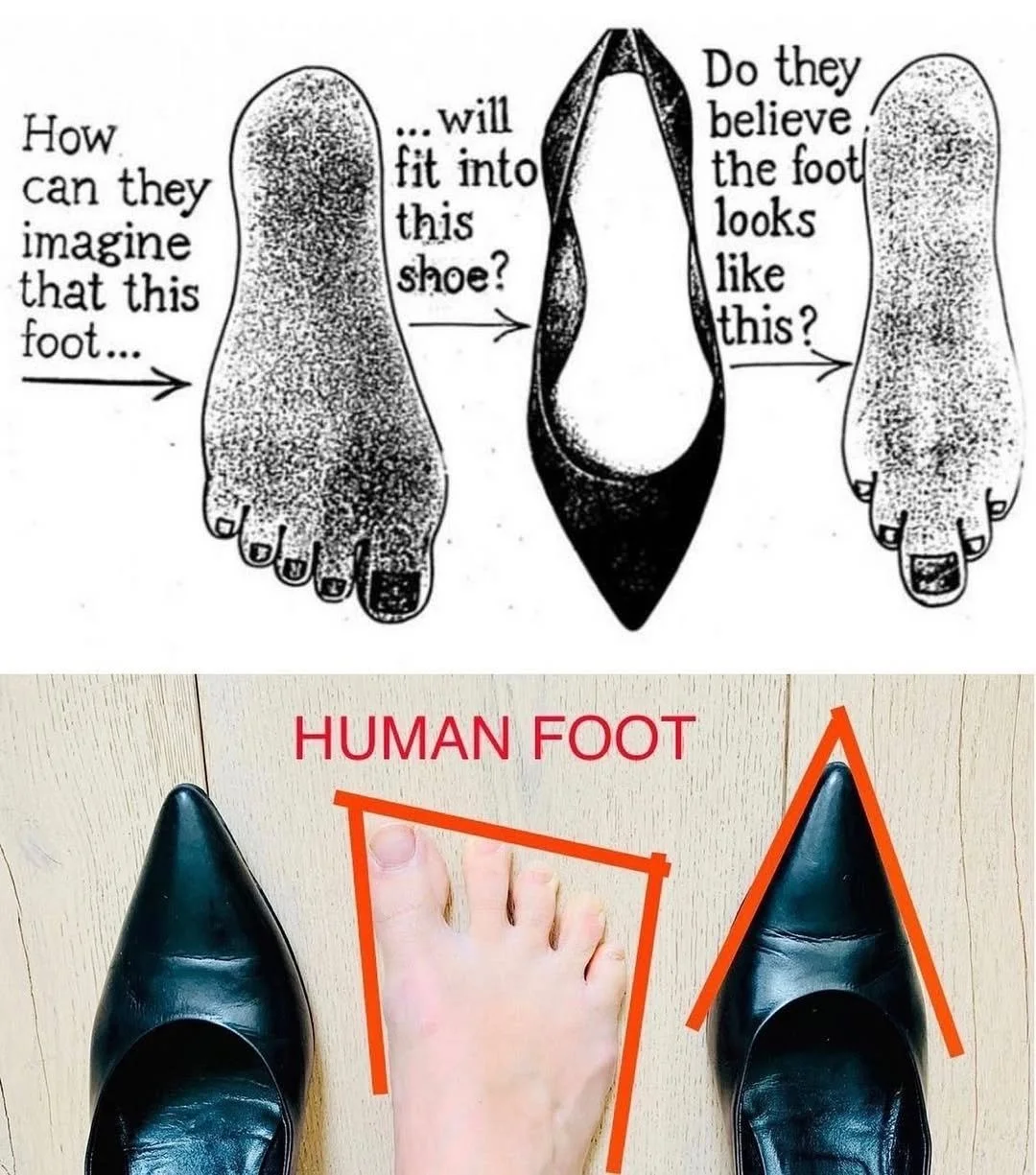
This photo really highlights how disconnected many shoe companies are from the natural shape of the human foot.
👣 Pointy Shoes
Pointy shoes restrict the natural shape and movement of our feet and can contribute over time to issues like bunions, clawed toes, calluses, weak arches, and stiff joints—affecting the entire kinetic chain from our feet to our knees, hips, and back.
Choose shoes that give your toes room to spread, allow natural movement, and respect the anatomy of your feet.
👣 Cushioned Shoes
Highly cushioned shoes can reduce the sensory feedback and natural loading your feet need to stay strong and responsive.
If you’re used to cushioned shoes don't switch overnight. Gradually transition and alternate from more cushioning → less cushioning → barefoot-style shoes → barefoot, allowing your feet and tissues time to adapt. And ff your feet get sore, listen to them. That’s a sign to slow down and give them time to recover.
Let your shoes support your feet, not force your feet to adapt to your shoes. What happens at our foundation affects everything above it, and it starts with our feet!
Active vs. Passive Alignment
Why alignment on its own isn’t enough…
Do you sink into one hip when standing? Push your pelvis forward? Lock your knees? Round forward when sitting? This is known as sinking into your joints and body and over time can cause unnecessary wear and tear, leading to joint health issues down the road
In order to stabilize and strengthen these positions, it can help to practice the movement patterns that can support you long term. Learning correct alignment can help but on its own it is passive. Active alignment uses the muscles and fascia to create stability, strength, and connection while teaching the body to move in healthier, more supportive patterns. This matters because uneven alignment and joint loading can contribute to wear and tear without obvious pain signals until damage has progressed. Becoming aware of our everyday movement patterns helps protect the joints and tissues over time.
Active alignment also sensitizes the nervous system, giving it better information to guide the body safely and efficiently through its environment.
Simply placing the body into alignment doesn’t create lasting change. Activated alignment teaches the body to organize, stabilize, and move from that position.
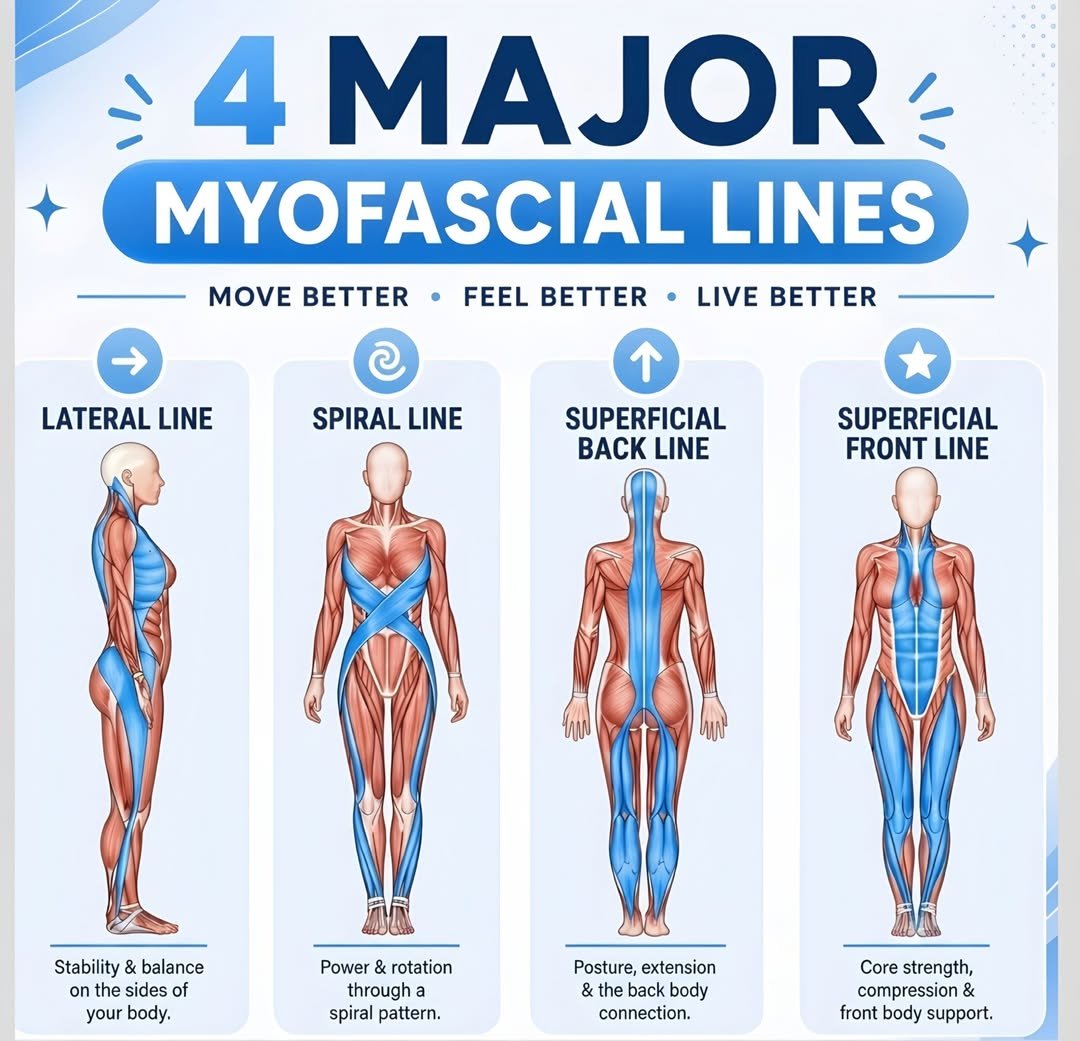
By activating through the fascial lines, we connect joints, muscles, fascia, and the nervous system into an integrated system. This can support:
Better joint positioning and force distribution
Active stability and strength
Proprioception, balance, coordination, and body awareness
More efficient movement with fewer compensations
A stronger foundation for strength, mobility, and functional movement
Greater brain to body connection, grounding, and efficiency
And with consistent practice, these patterns can become more natural and sustainable.
Alignment is the position. Activation teaches the body to own it, connect through it and move from it.
This is what we practice in our Activate Your Alignment Classes and what we build on the mat can support how we move and feel in everyday life, now and for years to come. You are welcome to join us online on Mondays at 9:15am to experience this kind of class!
Why Does Stability Matter?
Why does stability matter so much in movement?
Because your nervous system prioritizes feeling safe. When it senses instability, your body may tighten or limit movement around an area to protect it.
So if you have chronic tension that is not improving with stretching, you may actually need more strength and stability work, not more stretching. Too much passive stretching can actually contribute to instability, stiffness and soreness. Read more here.
In class, we use Organization & Activation, based on current movement science, to create stability first. Through a combination of muscle activation, fascial tension and optimal joint organization, we build the foundation for:
Greater strength
Functional mobility
Better balance
Injury prevention
More freedom in movement
What does not build stability?
Deep stretching, extreme flexibility work and passive range of motion.
Stability first = more strength, more freedom, more capacity.
If you would like to feel the difference for yourself, join us for a Yoga for Stability, Strength & Mobility live Zoom class on Mondays at 9:15am.